
The room itself is consequential.
Providing the right conditions deepens connection and allows ideas to take form.
How it feels to be here matters. It is not a space people forget.
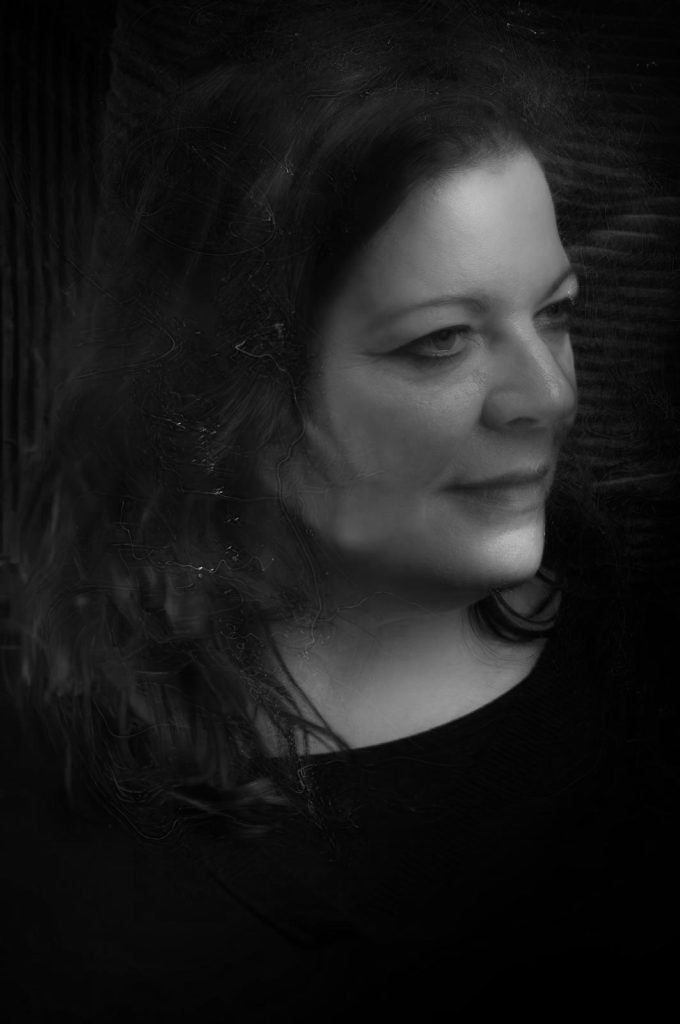
Jacqueline Silver
Founding Director
The Room
Then
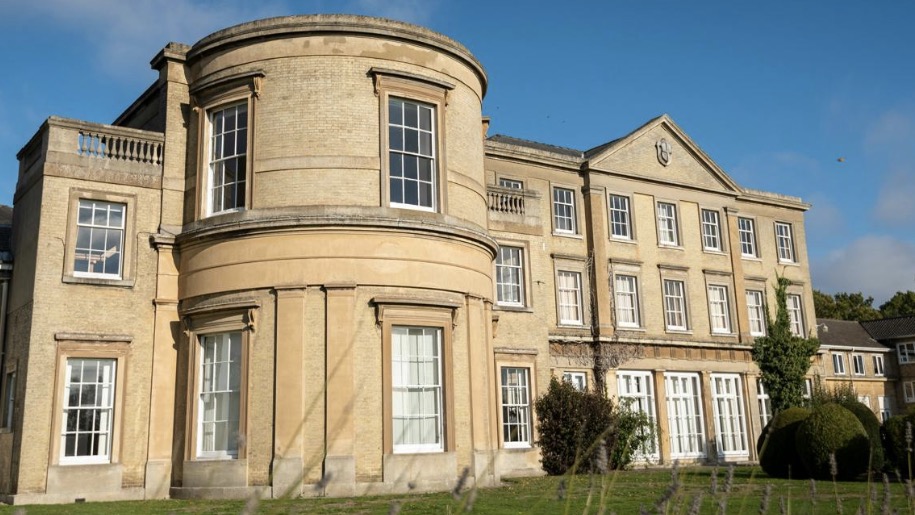
Keswick Hall was designed by William Wilkins in 1817 for Richard Gurney – Quaker banker and patriarch of one of the most remarkable families in Norfolk’s history. The Gurneys founded the bank that became Barclays. Richard’s son Hudson, Fellow of the Royal Society, patron of Anglo-Saxon scholarship and MP, lived here for most of his long life.
His sister Anna was born here. Paralysed from the age of ten months, Anna never walked. She produced the first published translation of the Anglo-Saxon Chronicle at twenty-three, learnt Latin, Greek, Hebrew, Old English, Old Norse-Icelandic, Danish, Swedish and Russian, founded a school, worked for the abolition of slavery, and in 1845 became the first woman admitted to the British Archaeological Association. She moved to Northrepps Cottage on the north Norfolk coast in 1825, where she lived with her companion Sarah Buxton, and ended her days at Keswick Hall in 1857 in the care of her brother. Two thousand people attended her funeral.
These were people who held business and creative life alongside one another as naturally as breathing – bankers and scholars, reformers and artists, all under the same roof. Connected to the Norwich School of painters, to the poet and novelist Amelia Opie, and to a wider world of scholarship, reform and the arts. For them, thinking, making and acting on conscience were never separate activities.
We believe The Still Room now occupies what is likely to have been their morning room – set aside for the private work of the day: a mixture of correspondence and reading, music and drawing, conversation and the quiet business of a considered life. It is likely the room where Anna worked – where she would have spent her day in this same beautiful light as those who work in it today.
Now
A studio is where work is made, tested, abandoned and remade. Where thinking and making are not separate activities. Where the discipline of serious attention produces something that could not have been produced elsewhere. It is where people can return to, to make their best mistakes – and therefore their best work.
The studio tradition runs through the history of artistic, performance and intellectual life. From the ateliers of painters and sculptors to the rehearsal rooms of great dance companies, from the workshops of the Bauhaus to the writing rooms of playwrights and serious authors – the studio has always been the environment in which practitioners of all kinds do their most significant work. It is defined by the quality of attention it demands and the seriousness of what it holds.
That tradition has not historically been applied to business or professional development. But the underlying need is identical. When the conditions are right, thinking goes further. Ideas get tested. Conversation deepens. The Still Room exists for that process – the focused, unhurried work of genuine development that needs somewhere serious and separate enough to hold it.
For theatre makers, actors and creative practitioners, it is the studio they have always needed and rarely have – somewhere to return to, to develop work without pressure or interruption, to be part of a community that takes practice seriously. Just as artists have. For businesses, facilitators and professionals, it is an environment that holds the quality of thinking a good day demands.
We spend most of our daily working lives with people who do what we do. At The Still Room, business people and artists, therapists and entrepreneurs, lawyers and actors all find themselves in the same space – at workshops, networking events, as guest speakers for each other or simply passing through. The perspectives that come with them are unexpected. The conversations that follow tend to be the ones people mention afterwards.
This has always been a space for what matters.